What to Say When Your Partner Shuts Down During a Conversation
Few situations feel more frustrating than trying to talk to your partner while they stop responding. They become quiet, avoid eye contact, leave the room, or answer with one word. You want to solve the problem, but every attempt to continue the conversation seems to push them farther away.
Many people assume silence means their partner does not care. In many cases, the opposite is true. Some people shut down because they feel overwhelmed, afraid of making things worse, or unsure how to express what they feel.
Understanding the difference changes how you respond.
Why People Shut Down
There are many reasons someone withdraws during conflict.
Some people grew up in homes where arguments felt unsafe. Others learned to hide emotions because expressing them led to criticism or punishment. Some become overwhelmed when emotions rise and need time before they think clearly.
Shutting down does not always mean a lack of love.
It often means the person does not know how to stay present during difficult conversations.
This does not excuse unhealthy behavior. It simply helps explain why it happens.
What Not to Say
When emotions are high, these responses often make the situation worse.
“You never talk to me.”
“You don’t care about this relationship.”
“Fine. Forget it.”
“If you loved me, you’d answer.”
“You’re acting like a child.”
These statements usually increase defensiveness. Your partner becomes more focused on protecting themselves than understanding your concerns.
read also 15 Phrases That Stop Arguments Before They Get Worse
How to Say What You Feel Without Starting a Fight
Why Conversations Turn Into Arguments (Even When You Mean Well)
What to Say Instead
1. “I notice you’re getting quiet. I want to understand what’s happening.”
This shows curiosity instead of blame.
Your partner feels seen without feeling attacked.
2. “I’m not trying to fight with you. I want us to understand each other.”
This lowers the pressure.
Many people withdraw because they expect criticism. Reassurance creates emotional safety.
3. “Would you rather think about this for a few minutes before we continue?”
Some people process emotions more slowly than others.
Offering a short pause respects different communication styles.
4. “I’m here when you’re ready to talk.”
This communicates patience instead of pressure.
It also makes it clear that the conversation is important and will continue later.
5. “Help me understand what feels difficult right now.”
This invites honesty instead of demanding answers.
Your partner might say they feel overwhelmed, confused, or afraid of saying the wrong thing.
Listen More Than You Speak
When your partner starts opening up, avoid interrupting.
Resist the urge to defend yourself immediately.
Instead, ask simple questions.
“What did you mean by that?”
“Tell me more.”
“How long have you felt this way?”
Small questions encourage deeper conversations.
Avoid Turning the Conversation Into a Debate
Your goal is not to prove who is right.
Your goal is understanding.
If every sentence becomes a disagreement, your partner will likely stop talking again.
Focus on learning instead of winning.
Respect Healthy Breaks
Sometimes a conversation needs a pause.
A healthy break is different from avoiding the issue.
A healthy break sounds like this:
“I’m feeling overwhelmed. I need 20 minutes to calm down. I’ll come back so we can finish talking.”
An unhealthy pattern sounds like this:
“I’m done.”
Then the conversation never happens again.
Healthy relationships return to difficult conversations.
Share Your Feelings Clearly
Instead of saying:
“You ignore me.”
Try:
“I feel lonely when we stop talking because I want us to solve things together.”
This focuses on your experience instead of criticizing your partner.
If Your Partner Needs Space
Respecting space does not mean ignoring problems.
You might say:
“I understand you need some time. Let’s talk again after dinner.”
Or:
“Let’s continue tomorrow morning when we’re both calmer.”
Setting a specific time prevents the issue from disappearing.
If Shutting Down Happens Often
Repeated emotional withdrawal creates distance.
If every difficult conversation ends with silence, unresolved issues begin to build.
Look for patterns.
Does your partner withdraw only during certain topics?
Does it happen after criticism?
Does it happen when voices become louder?
Understanding the pattern helps both of you prepare for future conversations.
Build Safety Before Conflict Happens
Communication does not begin during arguments.
Strong relationships build trust every day.
Express appreciation.
Thank your partner for small things.
Ask about their day.
Spend time together without distractions.
When emotional safety already exists, difficult conversations become easier.
Remember That Different Communication Styles Exist
Some people think while they talk.
Others need quiet before they know what they feel.
Neither style is wrong.
Problems begin when each partner expects the other to communicate exactly the same way.
Learning each other’s style reduces frustration.
Practice One Conversation at a Time
You do not need to solve every relationship issue in one evening.
Choose one topic.
Stay focused.
Avoid bringing up old arguments unless they are directly related.
Finishing one conversation well builds confidence for the next one.
A Simple Conversation Example
Instead of this:
You: “You always shut down.”
Partner: Silence.
You: “See? You’re doing it again.”
Try this instead:
You: “I notice you’re getting quiet.”
Partner: “I don’t know what to say.”
You: “That’s okay. I’m not looking for the perfect answer. I want to understand what you’re feeling.”
Partner: “I feel like whatever I say will be wrong.”
You: “Thank you for telling me. Let’s take our time.”
The second conversation creates room for honesty instead of defensiveness.
When Professional Support Helps
If shutting down has become a long term pattern and every serious conversation ends the same way, working with a qualified couples therapist may help.
Therapy provides a structured environment where both partners learn healthier communication skills and practice them with guidance.
Seeking help is not a sign of failure.
It is a decision to strengthen the relationship.
Final Thoughts
A quiet partner is not always an uncaring partner.
Sometimes silence is a sign of fear, emotional overload, or uncertainty.
Responding with curiosity instead of criticism gives the conversation a better chance of succeeding.
Learning what to say during these moments takes practice.
The more emotionally safe your conversations become, the easier it becomes for both partners to stay present, even during difficult discussions.
Want More Word for Word Scripts?
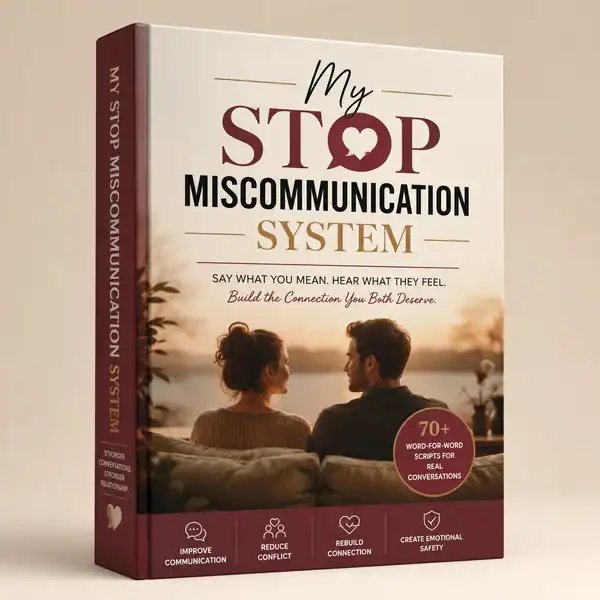
Knowing what to say in the moment is often the hardest part of communication.
Our Couple Miscommunication System gives you more than 70 word for word scripts for real life situations, including:
• Bringing up sensitive topics without starting an argument.
• Responding when your partner shuts down.
• Asking for reassurance without sounding demanding.
• Setting healthy boundaries with kindness.
• Repairing after conflict.
• Rebuilding trust.
• Apologizing in a way that helps your partner feel heard.
You will also get communication exercises, practical worksheets, and step by step guides designed to help couples communicate with more confidence and less conflict.
If you often think, “I know how I feel, but I don’t know how to say it,” this system gives you the words to start healthier conversations.